feeling lost and greedy algorithms
a friend came to me feeling lost in life, not sure what to do with their time, why they do what they do everyday, the purpose in life that they are working towards. i think it's a very common experience in one's 20s, and especially so in college. you see others chasing after something they seem so sure of, and you see the myriad of paths you can take but feel nothing towards any particular one. i had plenty of time to reflect about this when i solo travelled, and it seems that i now have to give advice on how my friends might navigate this (although it's still a journey i'm on myself).
it's a dark place to be in, not seeing any direction in life. i'm sure it's more than an uncommon experience, hikikomori and 躺平 are surely, in some ways, symptoms of such feelings.
it's a tough thing to figure out, but it's good you're thinking about it now. it's much better than waking up one day halfway throughout your life, to only realize then that you're not doing something you want to. it's going to take time to figure out, but just keep at it.
this was some of what i could say then as advice. it's obviously difficult to know in your 20s what you want to do and pursue for the rest of your life. we of course look with envy at those who seem to know they want to be doctors, lawyers, or other similar noble careers. as much as i respect their dedication and sureness in life, i equally admire those who have the courage to figure things out. for much of our lives, especially growing up in an Asian society, we are told exactly what we need to do: study hard, get good grades, go to a good university, get a good job. we are told the meaning and purpose of our lives, and we have very defined goals engrained in us. when we take the time to think about what it is we truly want as our purpose and meaning in life, we feel lost because all these pre-defined signposts disappear.
i was sitting in my computer science algorithms class, and while discussing the topic of greedy algorithms, my professor made a throwaway remark that was so relevant.
all life is, is a greedy algorithm
that took a while to comprehend, but it did make a lot of sense. i'll explain. we approach a problem with a greedy algorithm when it satisfies two conditions:
1. optimal substructure - an optimal solution can be constructed from optimal solutions of its subproblems
i only somewhat agree with this. indeed life would probably be good and well if at each period in life, you live optimally and make all the best decisions. do the best in school, go to the best college, get the best job, so on. life would be good, but i don't think that this is the only way to live a good life. struggle is a part of life too, and it makes it much more interesting to live and have these experiences. the downs define life as much as the ups do. so optimal solutions to subproblems, taken as smaller periods of life, can indeed lead to an optimal solution to life as a whole, but i think that sub-optimal solutions to subproblems, making some bad or sub-optimal choices in some periods of your life can still lead to a fulfilling and in many ways optimal life.
2. greedy choice property - choosing the locally optimal option at each step always leads to the global optimum
i find this point much more applicable in life, though still with caveats. making the best decisions at each point in life should technically lead to the best outcome in life, but sometimes things go wrong too. maybe making the sub-optimal decision would have led to a different, better path. it's the butterfly effect. but i think it's a good philosophy to have in dealing with life, especially towards the struggle of not knowing your purpose. at each time step in our lives, we can only look backwards at what we've experienced, but we can't look forward to see how our decisions now will play out. so all we can do is to make decisions that seem to us as the best right now. we want to think really hard and take the step that we know will be globally optimal, that we know will lead to the best overall outcome in life. but we don't know what that is. all we can do is take the locally optimal step, to just take it one step at a time, and not worry too much about the future. it's unknown, and all we can do is trust that what is best now will lead to good in the future. and so even if we don't know what exactly our long term purpose in life is, we can still find tiny purposes in everyday life. serving that purpose to the best of our ability, i believe, is the best we can do. that gives us meaning, while we continue our search for our greater meaning, if it does exist out there.
maybe i have something for commencement speeches, but all of this reminds me of a quote from Steve Jobs' 2005 Stanford commencement address:
You can't connect the dots looking forward; you can only connect them looking backwards. So you have to trust that the dots will somehow connect in your future.
all we can do is keep at it, finding our meaning and doing our best in the everyday.
edit: learning about Markov Chains in my probability class right now, seems like they make for an analogy somewhat related to this too
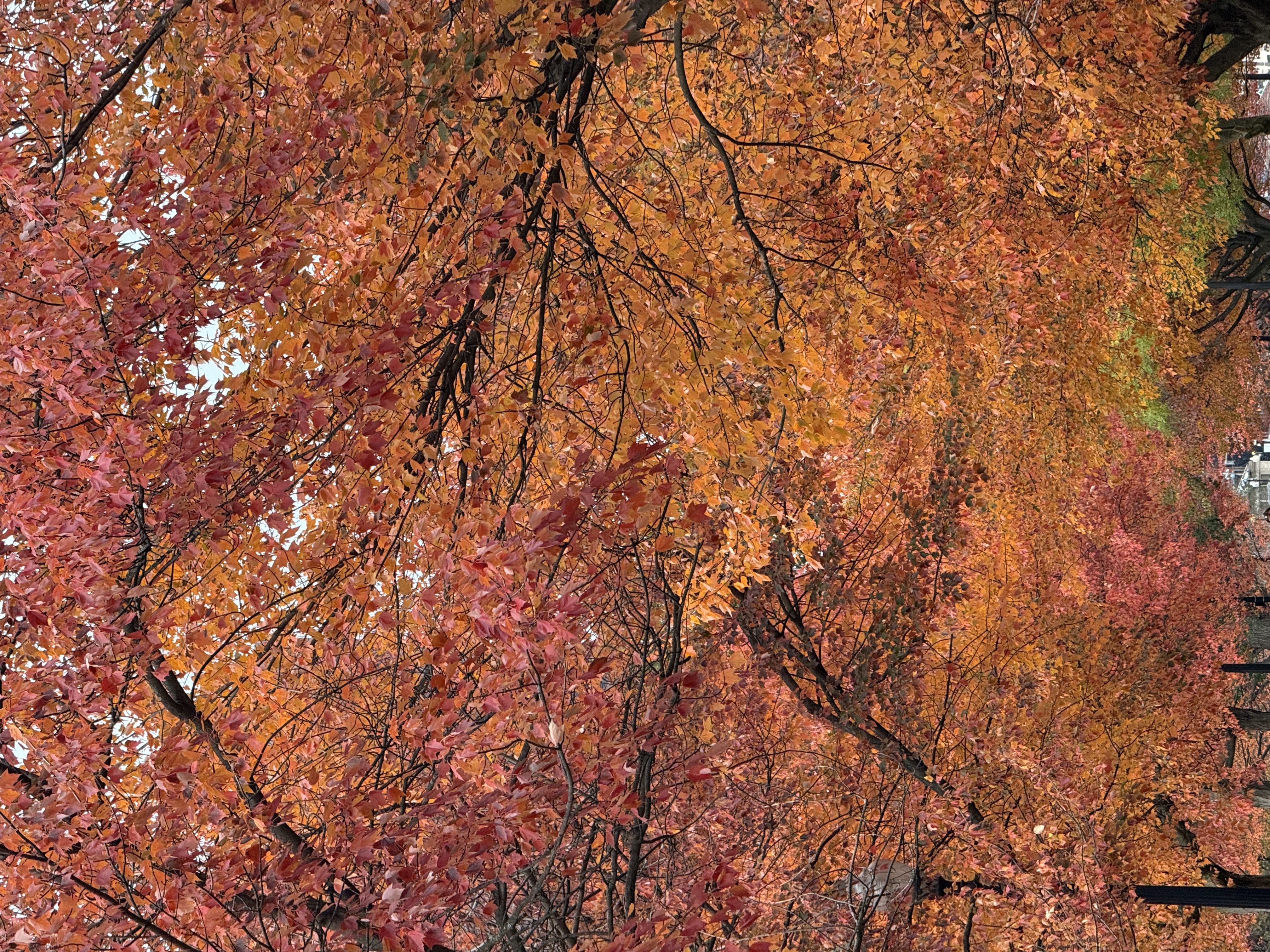 just like us, the trees trust that spring will arrive again. for now, they serve some of their purpose in providing acorns to squirrels in the fall and standing strong throughout the winter